Monday, September 14, 2015

My Continued Journey – Living With HIV


September 14, 2015

So Friday, September 11th I went to see my Primary Care Physician. I went in for a three month follow up visit to see what all is going on with my health. I received some not so good news this time. I actually found out that I have several skin cancers growing on my face. She is sending me to a dermatologist to find out what kind and to get rid of it. She also thinks I have the beginning stages of Congestive Heart Failure. I see my Heart Specialist in October so we will find out for sure what is going on there. We also discussed the fact that I have gained 50lbs since this same time last year. We did figure out that this is about the same time I was switched to the Triumeq, which I was taken off of after only being on it for 4 months because I gain over 30lbs those 4 months and that was the only medication change that had been made. Unfortunately the new combo of Truvada and Tivcay have not been that successful at helping to stop the weight gain because I have packed on another 20lbs. on top of the extra weight, my legs and feet are swelling from not being able to sleep in my bed, I get very little sleep because of the insomnia that I cannot get rid of even with medication, the migraine headaches are starting to come back even on medication for them,  my CD4 count has dropped by almost 800 and I am now detectable again, after being undetectable for 5 years. My CD4 counts are still over 2000, which are great, but we need to find out what is happening to cause such a dramatic drop in only 3 months.

I will be talking with my HIV Specialist about yet ANOTHER medication change. I guess I should have just stayed on the Atripla, even though I hated the side effects. At least when I was on Atripla I was losing weight and could actually have a bowel movement without struggling. Needless to say this has not been a good year so far. I have had a kidney stone blasted; now I have to have cancer removed from my face, and I keep packing on the pounds. I have not slept in my bed in over a month, because I cannot breathe when I lay flat. My partner of 19 years is getting a little lonely in the bed by himself I imagine. We do not talk about it much because he knows I cannot breathe laying flat right now. I know I miss my comfortable bed. 

 LIFE with HIV is NO CAKE WALK!!! It has taken every ounce of faith to keep me from falling into a great depression.
I will write more after my visit with my HIV Specialist on Tuesday.
Be well my friends and be blessed.

David Moorman

Sunday, September 13, 2015

HIV may kill most cells by a method overlooked for years


T cells, such as this one, can be destroyed by an invading HIV army (red dots) that is transferred directly into the cell (Image: NIBSC/SPL)

It’s the world’s most studied virus, but HIV can still take us by surprise. It turns out that the virus can infect and kill immune cells by being pumped directly from one cell into another, during brief connections made between the two.

Until recently, we thought that HIV particles circulating in the blood were largely to blame for infecting and destroying crucial immune cells called CD4 T cells. According to this classic model, after a single virus has infected a T cell, it hijacks the cell’s machinery to build hundreds of copies of itself, which bud off into the blood and eventually wear out and kill the host cell.

This thinking was based on research using blood, a relatively easy way to study the virus. But work with newer tools suggests that this is only part of the story. Using tissue-culture methods, a team led by Warner Greene at the Gladstone Institutes in San Francisco, has shown that in fact large numbers of virus particles are often pumped directly from one CD4 T cell into another. And it seems that this process may kill the vast majority of CD4 cells – not infection by single viruses.

Blocking transmission

HIV armies storm neighbouring T cells by hijacking yet another cell system, the immunologic synapses. These are short-term connections between immune cells that allow them to send chemical messages between themselves, which HIV uses to flow from an infected CD4 cell to an uninfected one.
Evidence suggests that this process is hundreds, possibly thousands, of times more efficient than the traditional mode of external infection. Greene says that 95 per cent of the CD4 cells they studied died by this process, rather than from infection by free-floating particles.

This new understanding could open up ways to target the virus, as well as influencing what drugs we choose to treat the disease. Walther Mothes has been studying cell-to-cell HIV transmission at Yale University, and he says that although most antiretroviral drugs work against both forms of infection, the much higher efficiency of pumping viruses directly into a cell can overwhelm some of these drugs, making them less effective.


But the finding may open the way for new treatments. The monkey version of HIV can also be transmitted directly from cell to cell, but monkeys may be able to tolerate this process.
Unlike their human equivalents, monkey CD4 cells manage to survive being inundated with virus particles, and Greene thinks that they have evolved a way to avoid self-destructing. He hopes that anti-inflammatory drugs could be used to mimic this effect in human CD4 cells. One potential drug candidate, VX-765, looks promising in the lab.

Hunt for a vaccine

A better understanding of how the virus spreads directly between cells is probably an important part of the HIV puzzle, says Kenneth Mayer at the Fenway Institute in Boston. He suggests that neglecting to take this mode of transmission into account may at least partly explain the failure of recent vaccine research.
HIV vaccines would work by generating antibodies to fight the virus. But research suggests that different types of antibodies would be needed to kill viruses that are inside cells and viruses that are free-floating in the body. Viruses hiding out inside cells may be more likely to escape destruction, and could perhaps find it easier to evolve resistance to antibodies.

Carl Dieffenbach of the US National Institute of Allergy and Infectious Diseases in Bethesda, Maryland, says that to better understand how to protect against cell infection, we need better vaccine candidates. “Is cell-to-cell transmission going to torpedo a vaccine? We don’t know the answer to this because we don’t have a safe, effective and durable HIV vaccine to understand the exact mechanisms,” he says.

Journal reference: Cell Reports, DOI: 10.1016/j.celrep.2015.08.011

Find more articles from New Scientist here: https://www.newscientist.com/

Saturday, September 12, 2015

How HIV (Human Immunodeficiency Virus) Infects a Cell


HIV follows these steps as it infects cells and reproduces.

(1) Attachment of the virion to the receptor on the cell. In the case of HIV, its gp120 attaches to a T4 cell’s, or macrophage’s, CD4 receptor and the coreceptor CCR5 and/or CXCR4 = fusin. The following picture shows (artificially colored purple) virions on the surface of a (salmon colored) T cell.

(2) Fusion with the cell membrane. The following diagram illustrates this process. The receptors from the virions lock to those of the cell. Then the virus receptors pull back and force a contact with the cell membrane. The rest is history.

(3) Penetration of the cell membrane,

(4) Uncoating, whereby the virion sheds its coat and leaves the its envelope behind.

(5) Reverse transcription of ssRNA to ssDNA using the enzyme reverse transcriptase occurs within the capsid.

(6) DNA synthesis of a second strand to form dsDNA.

(7) Migration to the nucleus of the cell.

(8) Integration into the host nucleus using the enzyme integrase. The integrated DNA form of the virus is called a provirus.

(9) Viral transcription. Once within the host cell’s nucleus, HIV transfers its genetic code to that of the host and henceforth, the host cell can become a virus factory. The cell could lie dormant (non-replicating) for some time or it could immediately begin producing more viral RNA. Such dormant cells are usually T memory cells and are called resting cells.

(10) RNA nuclear transport moves the RNA out of the host nucleus toward the inner surface of the cell membrane.

(11) Protein synthesis, whereby long proteins are split into smaller pieces, using the enzyme protease.

(12) RNA packaging and virion reassembly using the split proteins.

(13) Reencapsidation.

(14) Viral proteins push against the cell membrane and begin budding.

 (15) Release of virions by either budding (see the pictures below, which were taken from a September 1998 issue of the New England Journal of Medicine) or cell lysis. The half-life of this processing of HIV into mature virions is about 90 minutes. Each infected cell can produce an average of 250 new virions by budding before it fails and dies.


HIV also has the capacity to release its gp120 once it attaches to a T cell. This fills that receptor site on the T cell and disables its immune function. Thus, even non-HIV-infected T cells can feel the negative effects of the virus.


The virus lodges in the follicular dendritic cells of the lymph system. In addition, the virus can hitch a ride on the dendritic-like cells present in the mucosa (in particular, the anal, vaginal, and oral mucosa), using a receptor designated DC-SIGN, without infecting the cell (van Kooyk, Figdor, et al. March 3, 2000 Cell). These cells also migrate to the lymph nodes. Once there, the virus attacks the T4 cells. After an extended period of fighting the virus, the body succumbs and the dendritic cells in the lymph nodes are “burned out.” For this reason, some people with advanced HIV disease do not produce antibody to the virus. The following picture shows T cells (roughly spherical) on dendritic cells.

he virus can persist indefinitely (or so it seems) as latent proviral DNA, capable of replicating at any time. There is a negative association between the activity level of cytotoxic T lymphocytes (CD8+) and viremia, the more active the T8 cells, the lower the reproduction rate of the virus. On the other hand, Saha, et al. published an article in the January 2001 issue of Nature Medicine showing that HIV can infect CD8+ cells without using either CD4 as a primary receptor nor either of the coreceptors CCR5 or CXCR4.

Research announced at the Twelfth International AIDS Conference in Geneva, Switzerland (6/98) showed that HIV can remain in resting (non-reproducing) T cells in so-called “latent reservoirs,” even after intensive drug therapy. Later work (5/99) estimated that the half-life of these latent reservoirs may be as long as forty to sixty years! Martin, et al. from NIH reported in January of 2001 that macrophages may also be latent reservoirs for HIV!


HIV does its dirty work by disabling the T4 helper cells, which are managers of the immune response. It can also directly affect the cytotoxic or killer-T cells. HIV suppresses the production of CD4+ T cells, infecting those cells and initiating apoptosis (one form of programmed cell death), and generally causing the cells to malfunction. The website for cellsalive (www.cellsalive.com) shows the process of apoptosis, wherein the cell begins to oscillate or bleb prior to lysing. Blebbing is an uncontrolled oscillation that eventually tears the cell apart.

Since macrophages have some CD4 receptors, they too are targets for HIV infection. Once infected, their lifespans seem to be extended indefinitely (they become immortal). This is especially problematic because macrophages can cross the blood-brain barrier. Hence, HIV has an avenue for attacking the brain, leading to AIDS dementia in a high proportion (55–65%) of those infected.

The B cells’ defense mechanisms do not work very well, because most of the virus is hidden away within the CD4 cells and is unavailable for attachment by antibody. Some good news is that antibody b12 does block gp120.

HIV affects B cells with CD21 by coaxing them to produce excessive amounts of nonessential antibodies. They then fail to respond to normal physiologic signals and are at increased risk of becoming cancerous.
In the December 15, 2000 issue of the Journal of Immunology, Marone and his colleagues at the University of Naples in Italy have discovered that the tat protein in HIV acts as a chemoattractant of monocytes and dendritic cells. Furthermore, basophils and mast cells exhibit CCR3 which HIV can use as a coreceptor, enhancing the production of tat and improving viral replicability.

HIV can also force the envelope glycoproteins to induce syncytia formation, whereby healthy T4 cells fuse to one another in a group surrounding an infected cell. This is a rather lethal form of the disease because it forces an abrupt drop in the CD4+ cell count and the resulting rise in the likelihood of opportunistic infections. The syncytia-inducing (SI) version of HIV seems to be most often found among intravenous drug users. At the December 1998 meeting of the American Society for Cell Biology, Soll, et al. reported that syncytia are much more common than previously thought. His group was even able to visualize a moving syncytium consisting of thousands of cells. These syncytia were short-lived, self-perpetuating masses that disrupted membranes made from collagen and punched holes in endothelial tissue. Unfortunately, collagen is a major constituent of lymph nodes and blood vessels are lined with endothelial tissue.

The journal AIDS 15:1627-1634 carried an article by P. Corbeau, et al. showing that as the CCR5 density on CD4+ cells increases so too does disease progression. Other work has shown that HIV can infect naive T cells which do not divide.


Find more interesting articles here: http://tophealthlogics.com


Tuesday, September 8, 2015

10 Myths about HIV and AIDS

http://assets.rappler.com/612F469A6EA84F6BAE882D2B94A4B421/img/841C2369E1504BA289A5B526802D21C0/hiv-aids-youth-ribbon-20130301-rappler.jpg
“Can I get infected if I share a meal with someone who is living with HIV/AIDS? Can HIV/AIDS be treated? To understand and tackle the challenges caused by HIV and AIDS, it helps to clear up the common misconceptions that surround the virus and illness.,,
 

Myth #1

There is no need to use a condom during sexual contact if both partners already have HIV.
Fact:
There are different strains of HIV. If a condom is not used during sexual contact, HIV-infected partners may exchange different types or strains of HIV. This can lead to re-infection, which will make the treatment of HIV infection more difficult. The new HIV strain may become more resistant to the current treatment taken, or cause the current treatment option to be ineffective.

Myth #2

Homosexual men and drug users are more likely to get infected with HIV than other people.
Fact:
In Singapore, 90% of all HIV infections occur through sexual intercourse. Out of these, 60% result from heterosexual intercourse. HIV is spread mostly through unprotected sexual contact and does not discriminate against anyone. It is not who you are but your risky behaviours which put you at risk of HIV infection. Regardless of your personality or sexuality, you will be at risk if you don’t take protective measures.

Myth #3

Getting HIV/AIDS is a death sentence.
Fact:
Although HIV/AIDS has no cure, it can be treated. There has been tremendous progress in treatment for HIV over the years. A person living with HIV/AIDS can now continue to live a strong and productive life for many years.

Myth #4

My partner tested negative for HIV. That means it is safe for us to have sex.
Fact:
An HIV test works by detecting the presence of antibodies in the body that develop when HIV infects the body. But it takes about three weeks for there to be enough antibodies for detection. In addition, to be sure that the individual is completely HIV-free, it is not enough to have one negative HIV test result – the individual would need to take another HIV test at least 3 months after the first one. He or she must also avoid any risky sexual activities in that whole period. If the second test result is negative, the individual is HIV-free and able to have sex without spreading HIV.

Myth #5

An HIV-positive person who receives antiretroviral treatment will not spread the virus.
Fact:
Antiretroviral therapy can reduce the amount of HIV in the body. However, HIV remains in the body and can be transmitted to others.

Myth #6

Faithful and loving partners do not spread HIV.
Fact:
You may think that your partner has been faithful and loving to you, and will not spread the virus. But what if your partner doesn’t know that he already has HIV? A person can be HIV-positive for years without symptoms. Besides, how sure are you about your partner’s sexual history? Also, HIV can be transmitted through non-sexual activities — such as blood transfusions and the sharing of injection needles — regardless of whether he or she has remained faithful. To be safe, use a condom during sex, and get your partner and yourself tested for HIV.

Myth #7

HIV infections can be cured by having sex with a virgin.
Fact:
There’s no cure for HIV/AIDS. However, HIV can be treated and a person who goes on treatment will be able to live a strong and productive life. By having unprotected sex with a virgin or anyone else for that matter, the person with HIV/AIDS can transmit the virus, which is irresponsible. In Singapore, it is against the law for someone with HIV/AIDS not to inform his or her partner of their risk of HIV infection.

Myth #8

HIV/AIDS cannot be transmitted during oral sex.
Fact:
Transmission of HIV occurs when there is an exchange of body fluids (such as semen, vaginal fluids, breast milk, blood or pre-ejaculatory fluids), and this is possible during oral sex when there are open wounds. These include cuts, sores or abrasions in the mouth or gums, or infections in the throat or mouth that are inflammed. There may also be abrasions or sores on the penis or vagina. It is best to avoid oral sex if you have any cuts, sores or abrasions, or if you have a sexually transmitted infection. Otherwise, it is advisable to use condoms when engaging in oral sex.

Myth #9

HIV can be spread during contact with saliva, such as through kissing or the sharing of utensils.
Fact:
HIV may be found in saliva, but it is in too small an amount to infect anyone.

Myth #10

HIV can be spread through non-sexual physical contact such as hugging, handshakes, sharing toilet seats, and from mosquito bites.
Fact:
HIV can only be transmitted through an exchange of body fluids. It cannot be spread through physical contact unless you have an open wound which comes into contact with the body fluids (semen, vaginal fluids, breast milk, blood or pre-ejaculatory fluids) of an HIV-positive person. Body fluids such as saliva, sweat and tears cannot transmit HIV. Also, as the virus cannot survive in insects, HIV cannot be transmitted through mosquito bites.

Saturday, September 5, 2015

6 Things Only Funny To Those Living With HIV


hiv-comics1

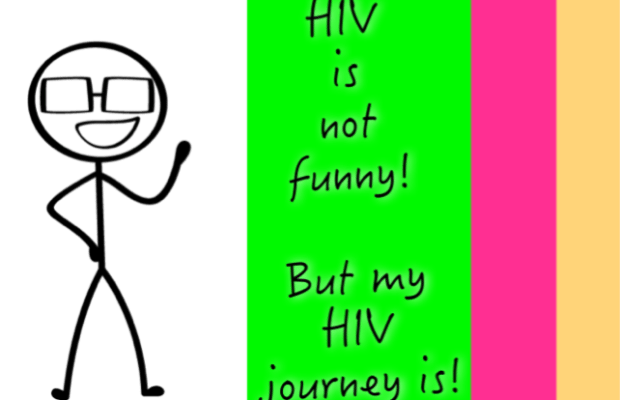
Living with the HIV is not funny.  But, finding the comedy in life, despite living HIV positive, certainly may keep the journey in perspective.

Here are 6 Things only funny (and really understood) by those living with HIV:

1. Don’t you just love it when people tell you to ‘stay positive’ when you are living with HIV?  They make it sound like you are just being negative.  There’s not a cure, people.  We are ALWAYS positive! 

HIV/AIDS Comics STAY Positive


2. Sometimes people just literally drive you crazy– or they do me, at least.  So, instead of saying something lame like: “you are lame” or “you’re driving me insane”… you should try and tell them that they are really raising your viral load. Their reaction (like you are dying before their eyes) is pretty much enough to make your day!  Just giggle on the inside!
HIV/AIDS Comics Raising Viral Load

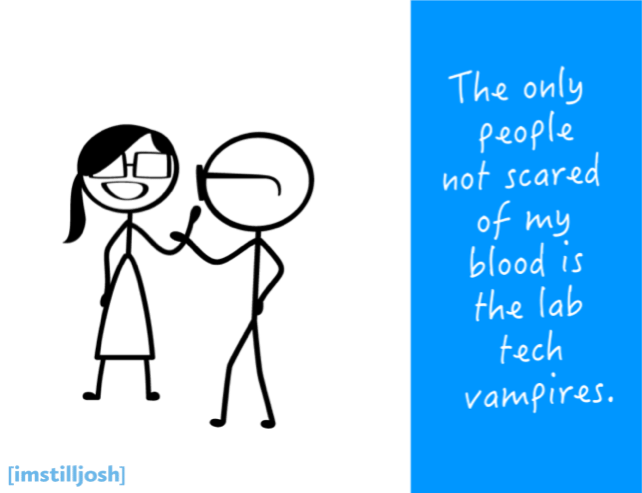
3.  HIV made me a lot of things in people’s minds, but their next blood meal is usually not one that would I have guessed.  But, dammit if we don’t get more tubes of blood drained from us after we get diagnosed with HIV than the negatives around… right?  It’s funny– when everyone else would run, these lab people are watering at the mouth to get in my veins.  Think about that! :)~
HIV Comics About Getting Pricked by a Needle

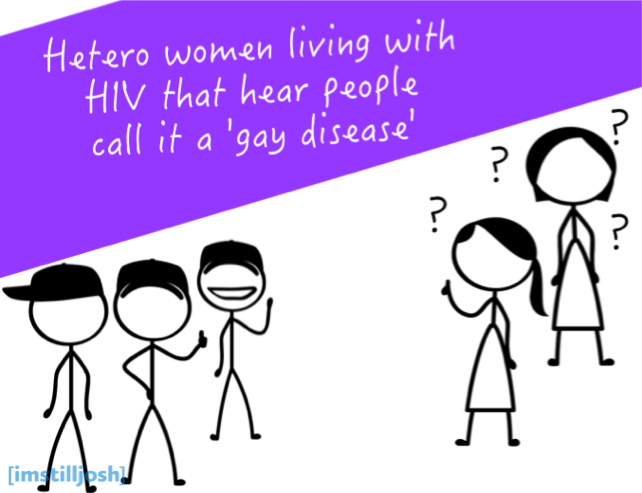
4.  Sure, those of us that are living with HIV and also homosexual may agree with the morons from time to time that are not educated enough to know that HIV is not a gay disease.  But, imagine if you were actually one of the women that make up a large portion of the global epidemic and only hear about a ‘gay mans disease.’
hiv-comics5


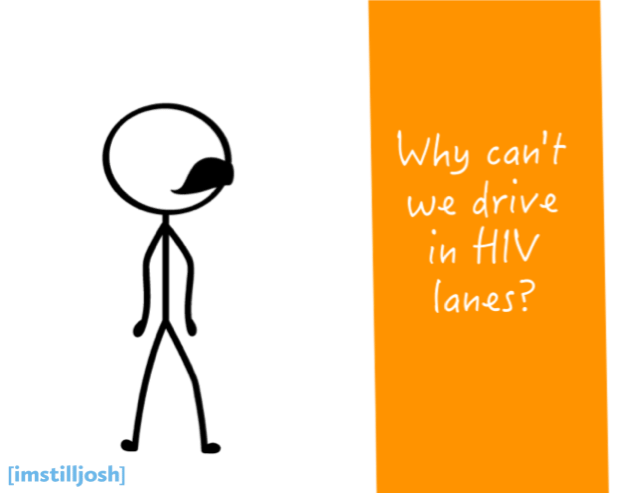
5.  I must be one of the only person in the world that wonders what type of epidemic that we really have going on with all the drivers in the HIV lane in Nashville.  Do you have that problem in your city?  If you don’t have HIV, get out of the HIV lane!  Okr!?!
HIV LANE Comics

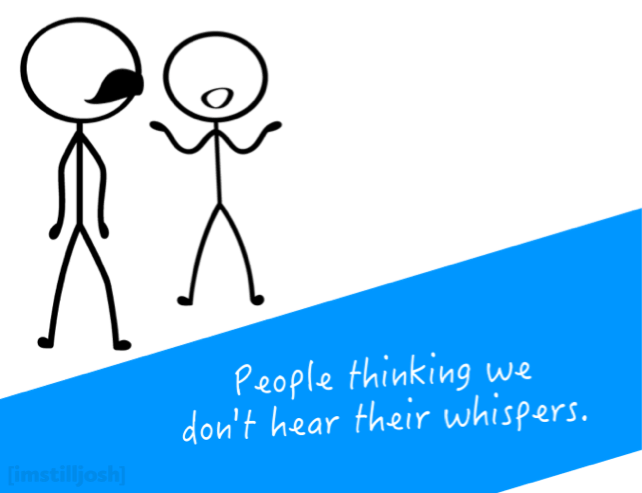
6.  One thing that is pretty comical about living with HIV is how other people believe it affects your ability to see, hear and sense …. when they are talking about you living with the virus.  Sure their comments are probably about how low my viral load is now, or how committed I am to go to the doctor, but you must have learned to share secrets that cool from ‘ya momma’ because we know.  That’s all I have to say– we know.  You better go find Felicia and go on. AIDS Comics

[imstilljosh]

HIV-Positive Blogger & Activist, Supporter of Equality & Encouragement, and also an owner of a talent agency and a partner to an incredible fella.

Thursday, September 3, 2015

Protests as NYC Closes Health Clinics and Reduces HIV Testing

September 2, 2015


Chelsea Clinic Town Hall
James Krellenstein reports on NYC's funding of sexual health services. Photo: Benjamin Ryan.
ACT UP New York and Treatment Action Group (TAG) held a town hall meeting Tuesday, September 1, to discus New York City’s diminishing investment in HIV testing and sexual health services, Medical Daily reports.

In March, the New York City Department of Health and Mental Hygiene (DOHMH) quietly shuttered its Chelsea clinic, the most popular health clinic in terms of testing for sexually transmitted infections (STIs). It is slated to reopen in 2017 after renovations, but similar closings have occurred with only one clinic reopening.

In fact, according to a report given by James Krellenstein of TAG and ACT UP, since 2010, the health department has dramatically decreased its funding allotted to HIV and STI testing and sexual health services. For example, the number of annual HIV tests provided by the city dropped from 300,000 in 2010 to slightly over 200,000 in 2014. Similarly, the number of clinic visits fell from 123,512 in 2010 to 83,025 in 2014.

Although the rate of new HIV infections has mostly remained stable at about 3,000 per year, other STIs have been on the rise during this same period. Gonorrhea in men has spiked 30 percent, and syphilis has gone up 40 percent.

At the town hall meeting, TAG’s Jeremiah Johnson noted that his biggest issue with the health department wasn’t that it closed the clinics but that it did so without communicating with the communities beforehand.

The Chelsea clinic was a vital part of HIV prevention for the city, as it is located in a popular LGBT neighborhood and sees more HIV and syphilis infections than other clinics. Last year, the Chelsea clinic accounted for a quarter of the STI clinic visits in the city, Johnson said.

The city, in an emailed response to Medical Daily, said that the TAG report is misleading because “Mayor de Blasio has added $1.1 million a year for STD clinics to enhance services for men who have sex with men. There was also nearly $4 million in the budget, thanks to the City Council, to end the epidemic. The estimated proportion of NYC residents ever tested for HIV has increased. The Chelsea Clinic is only one component of the city’s extensive services for people at risk for STDs and HIV.”

As Medical Daily noted, the closings happen just as New York State embarks on its End the Epidemic campaign.

After the town hall, held at Manhattan’s LGBT Center, protesters marched through the streets of Chelsea to the shuttered clinic.

chelsea clinic town hall
Protest signs at the town hall meeting. Photo: Benjamin Ryan.


chelsea clinic town hall
Kelsey Louie of GMHC and ACT UP co-founder Larry Kramer at the town hall meeting.
Photo: Benjamin Ryan.


ACT UP New York posted this video of the town hall meeting.
 
 
Find more articles here: http://www.poz.com

Older, Wiser, Ready for Their Close-Up


September 2015


by Trenton Straube
Documenting the Graying of AIDS
Graying of AIDS
Click here to read a digital edition of this article.

2015 marks a turning point in our nation’s HIV epidemic: It’s estimated that as of this year, more than half of Americans living with the virus are older than 50.

This is not news to visual journalist Katja Heinemann. Back in 2006, she published “The Graying of AIDS”—portraits of long-term survivors—in Time magazine, coinciding with the epidemic’s 25th year. The project, like its subjects, didn’t die. Instead, Heinemann teamed up with public health educator Naomi Schegloff, MPH, to launch GrayingOfAIDS.org, an archive of sorts for their various projects that document older HIV-positive people across the world. Constantly updated, the site includes photos, videos and interviews as well as reports on their traveling exhibitions and campaigns.

“Our overarching goal,” Heinemann says, “is greater visibility, because the HIV population is extremely invisible and isolated.” Elders, she says, shouldn’t feel pushed aside—“they should be represented more as resources, as opposed to problems.”

To get their message out, Heinemann and Schegloff have teamed up with AIDS groups, university professors, journalists, nonprofits and Walgreens. The pharmacy’s “Well Beyond HIV” campaign is currently traveling the country, placing large, impressive panels of images in public spaces as well as creating pop-up art exhibitions and community events.

Graying Pandemic
Images from the ongoing global project "A Graying Pandemic." From left to right: Michael, 62, from New Zealand; Dorothy, 55, from Kenya; Glenn, 50, from Australia
For their global project “A Graying Pandemic,” Heinemann and Schegloff have been creating portraits and brief oral histories of older HIV-positive people. They first set up a booth and installation at the AIDS 2012 international conference in Washington, DC, then at AIDS 2014 in Melbourne, Australia. (Next stop: AIDS 2016 in Durban, South Africa.) 


Heinemann recalls one man who, after circling their booth, decided to participate. Turns out, it was the first time he’d gone public about his status. A few days later, a passerby who was also secretive about his own HIV status saw the man’s portrait and recognized him from his circle of friends. Inspired, the passerby decided to pose for a public portrait too.

Most participants, Heinemann says, “are concerned with stigma, sexuality, intimacy, mortality, and general frustration with being in old age and how their bodies are changing, which is pretty universal.” But, she adds, “they have a desire to share their stories, to combat the isolation and to ultimately make life easier for others.”
 
Find more articles here: http://www.poz.com